In many organizations, the contract story begins with an email: ‘We need an agreement with the supplier.’ The request moves to legal, a Word file is circulated, comments move between emails and me....


In many organizations, the contract story begins with an email: ‘We need an agreement with the supplier.’ The request moves to legal, a Word file is circulated, comments move between emails and meetings, and approvals are requested from several departments. After signature, the final version is saved in a folder known to only a few people. Months later, the harder questions arise: When does the contract renew? Which obligations remain unfulfilled?
This is not merely a drafting problem. It is a problem of managing the entire contract lifecycle. That is where Contract Lifecycle Management, or CLM, comes in.
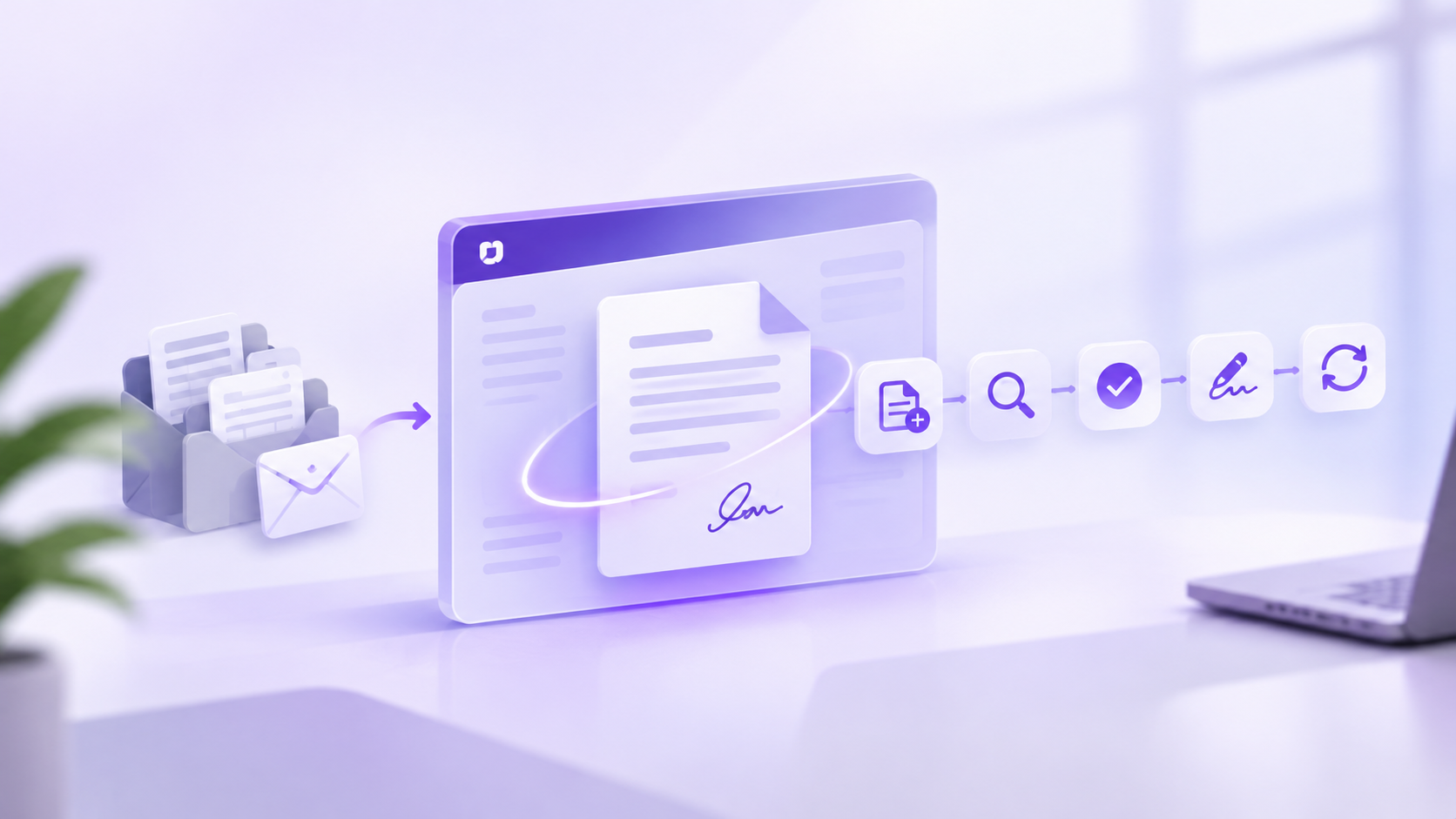
Contract lifecycle management is the organization of every stage a contract passes through, from the emergence of a business need until expiry or renewal. A sound system does not merely retain the final copy; it connects people, decisions, documents, and data in a single workflow that can be tracked and measured.
Put simply, if archiving answers ‘Where is the contract?’, CLM also answers: ‘What stage has it reached? Who must approve it? What changed? What must we perform? And when is a new decision required?’
E-signature solves an important stage, but it does not manage what comes before or after it. A shared folder stores files, but it does not enforce an approval route, explain why a clause changed, or link an obligation to an owner and a due date. CLM, by contrast, treats the contract as an integrated workflow and as a source of usable legal and commercial data.
Quick test If you can find the contract but cannot determine its status, obligations, or decision history without asking three people, the problem is not storage; it is lifecycle management.
Approved templates, structured data collection, and approval routes reduce time lost to repetitive questions and chasing versions. Here, speed does not mean cutting legal review short; it means removing manual work that does not require legal judgment.
When permissions, approvals, changes, and action logs live inside the system, it becomes easier to know who made a decision, on which version, and why the contract moved to the next stage.
Contracts contain dates, rights, liability limits, termination provisions, and operational obligations. Extracting this data and linking it to alerts makes legal a partner in decision-making, not merely a review checkpoint before signature.
Instead of keeping the best drafting and negotiation rationale in a lawyer’s inbox or a manager’s memory, contracts, templates, and decisions become knowledge that can be retrieved and reused.
UrNamu Enterprise brings drafting, review, negotiation, approvals, signature, the repository, and obligation tracking into one platform. It adds two layers above the workflow: an AI legal assistant to analyze clauses and risks and support drafting, and a lawyer-validation layer when the output requires qualified human review.
An organization can use its in-house legal team or external counsel to validate outputs inside the platform, or request review through the UrNamu network according to the service scope. The result is not ‘AI instead of legal’; it is a system that lets every participant focus on the work where they add the greatest value.
Moving from files to CLM does not mean buying better storage. It means redesigning how a contract moves through the organization and turning every contract into a trackable process and a source of knowledge for future decisions. When the contract lifecycle is clear, speed, governance, and visibility improve together.